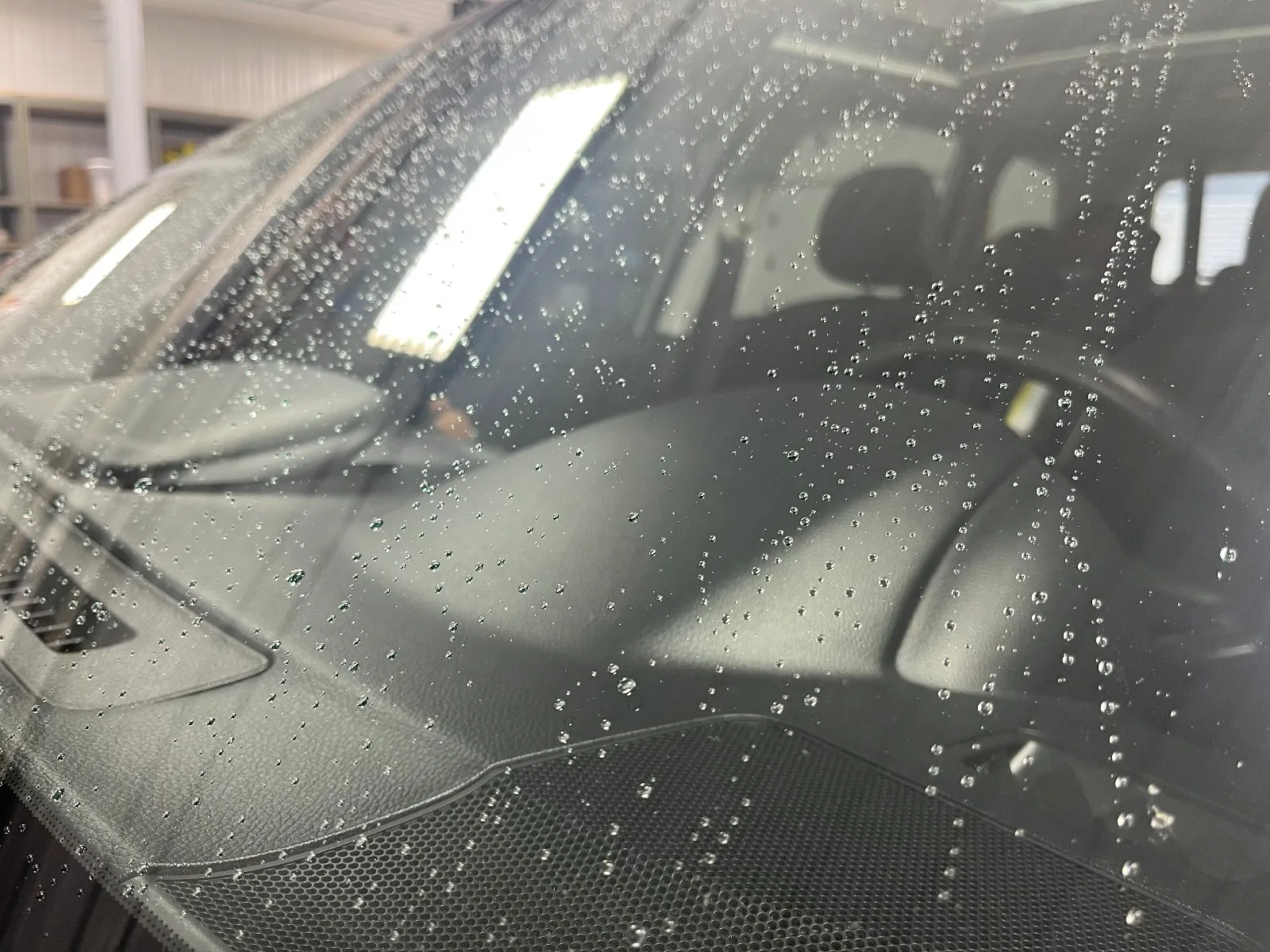
Every fall I see the same front end. Harvest roads, a few hundred miles of highway, and the bumper, grille, and mirrors are packed with bugs that have been baking on for a week. The usual response is a sponge and a lot of elbow grease. That's the part that does the damage.
Dried bugs don't need more muscle. They need time to soften. Here's the routine that actually works, and it's the same whether the truck is bare paint or ceramic coated.
Why scrubbing makes it worse
A dried bug is hard, gritty, and stuck. Scrubbing drags all of that across the clear coat, and on a bumper that's already been sandblasted by the highway, you're adding scratches on top of chips. The bug comes off eventually, but the haze it leaves behind is yours to keep.
There's another catch. Bug guts are acidic. The longer they sit, the more they eat into the finish underneath. So the goal is to get them off soon, and gently.
The soak-and-wait routine
- Work in the shade on a cool panel. Product that dries on hot paint is a new problem.
- Rinse first. Get the loose stuff and the dust off before anything touches the paint.
- Lay a soaked towel on it. A wet microfiber or old wash rag draped over the bugs for a few minutes softens them more than any spray will on its own.
- Use a bug remover and actually let it sit. The coating-safe removers I trust call for a real dwell time. Gtechniq, for one, says three to five minutes on a cool surface, and don't let it dry. Spraying and wiping right away is how people empty a whole bottle and get nowhere.
- Rinse and repeat. Two or three soak cycles beat one hard scrub every time. For a stubborn spot, a soft microfiber or a bug sponge with light pressure.
- Wash and dry like normal. Then put some protection back on the front end so the next batch lets go easier.
Skip the dryer sheets
It's all over the internet, and it came up again in the detailing groups this fall. In a side-by-side test published by Car Care Coaches, dryer sheets barely lifted the bugs and left scratches on the bumper. The bug remover and a rinse did the real work. Save the dryer sheets for the dryer.
If marks are still there
Once every bit of residue is gone and you can still see the outline of where a bug sat, that's not dirt anymore. That's etching in the clear coat from the acid. No chemical takes that out. It takes a light polish, and if the vehicle is coated, that spot needs its protection topped back up, because polishing removes coating along with the mark.
On a healthy coating, bugs should come off easily. If they're fighting you on a coated truck, either they sat a long time or the coating is buried under road film and needs a proper decontamination wash.
Will bug remover hurt my ceramic coating?
Use one that says it's coating safe, follow the label, and rinse it before it dries. A coating-safe remover with a proper dwell is gentler on the coating than scrubbing is.
How soon do I need to get bugs off?
Sooner is better. Bug residue is acidic, and the longer it bakes on, the better the odds it etches. A rinse and soak within a few days saves you a polish later.
Can I just use the car wash?
A touchless bay with a good presoak will take the fresh ones. Dried-on bugs usually need the soak time a quick wash can't give them.