
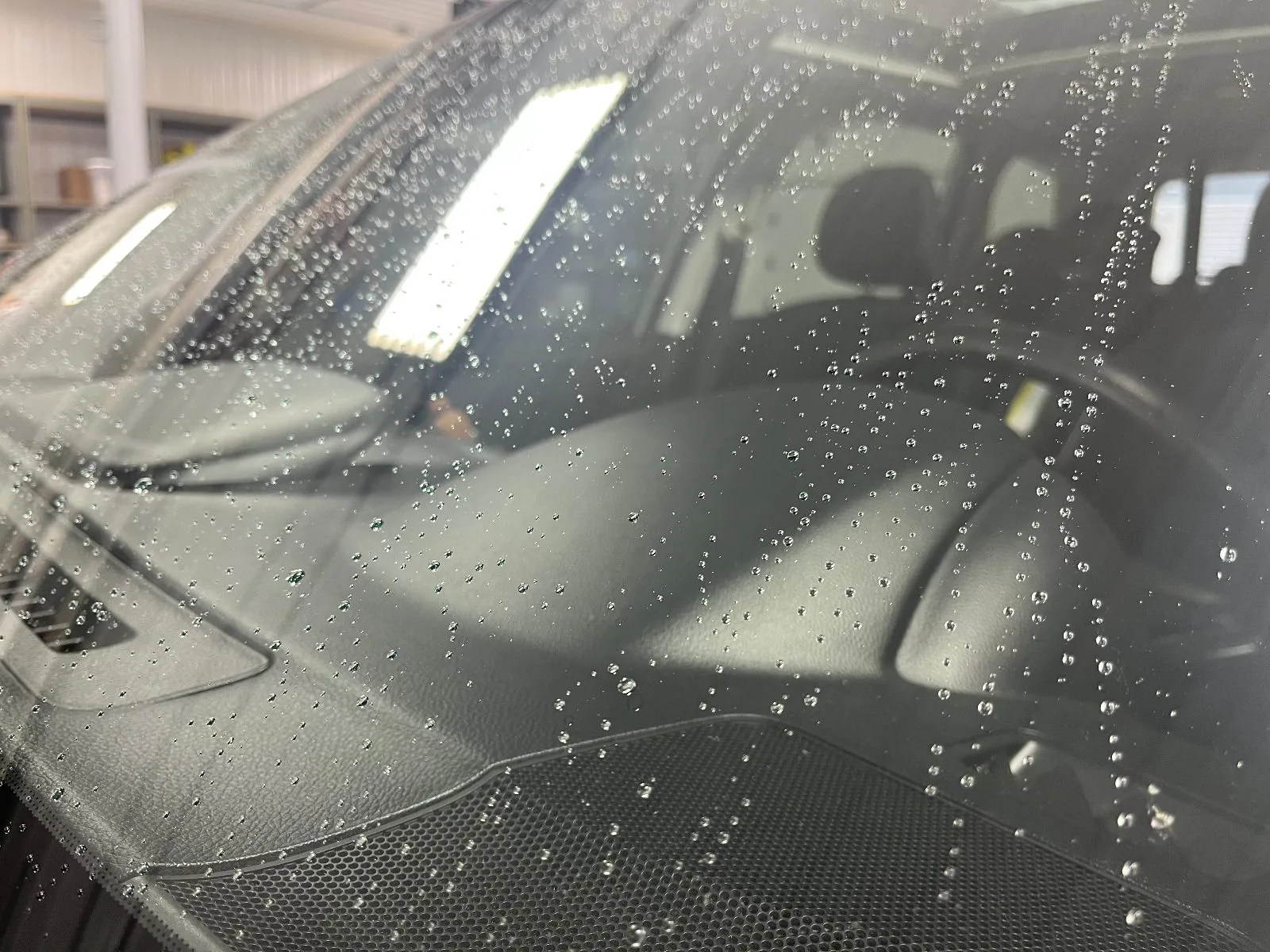
Somebody pays for a ceramic coating and then asks me, half joking, whether they ever have to wash the truck again. Fair question. The honest answer: yes, but it's a different job now. The coating makes dirt let go and water sheet off, so a wash that used to take an hour takes twenty minutes and does less harm doing it.
The trick is that the same handful of habits that keep the coating working are the ones most people never get told. Here they are.
What the coating is doing for you
A proper ceramic coating bonds to the clear coat and cures into a hard, slick layer. Dirt has a harder time sticking. Water beads and runs instead of sitting and spotting. Bugs and bird droppings come off with less fight. You still get dirty; you just get less dirty, and it's easier to fix.
Everything below is about not putting anything between you and that layer, and not taking the layer off.
The rules
- pH-neutral car shampoo. Not a degreaser, not dish soap, not a wash-and-wax. A gentle, neutral soap cleans a coated surface completely because the coating is already doing the hard part.
- Two buckets and a mitt. The two-bucket wash is the same on a coated vehicle as any other. A coating resists scratching better than bare clear coat, but it isn't armor; grit dragged across it still marks it.
- Don't wax it. Wax sits on top of the coating, dulls its slickness, and attracts dust. You don't need it, and it makes the coating behave like it's not there. If you want the beading sharper, that's a coating-specific topper, and I'll tell you which one.
- No polish, no compound. This is the one that hurts. Polish is abrasive; it removes material. Used on a coating, it removes the coating. If there's a scratch or a mark, text me. Don't take it to the polish aisle.
- Skip the brush washes. Touchless is fine, especially in winter. The spinning brushes are the same grit problem as a sponge, just faster.
- Dry it. Watertown water is hard. Mineral spots left to bake on a coating can bond to it and take real work to remove. Drying towel or a blower, every time, and especially the glass.
- Get the bad stuff off soon. Bird droppings, bug guts, tree sap. The coating buys you time; it doesn't buy forever. A quick spot-clean the same day beats an etch mark that's there for good.
What "maintenance wash" means
When I say maintenance wash, I mean exactly the routine above, done regularly enough that nothing ever gets a foothold. For my longer-term ceramic customers I run a monthly plan where I come do it, the Premium Ceramic Care plan, because a coating that's kept clean stays slick for years, and one that's neglected for a season starts acting like plain paint.
Whether it's me or you doing it, the job is the same: gentle soap, clean mitt, dry it, don't put anything on it that isn't supposed to be there.
Can I use a wash-and-wax soap on my coating?
I wouldn't. The wax in those soaps lays down on top of the coating, and now you're maintaining a film of wax instead of the ceramic underneath. Plain, pH-neutral car shampoo is all it wants.
Water isn't beading like it used to. Is the coating gone?
Usually not. What you're seeing is road film and mineral deposits sitting on top of the coating, masking it. A proper decontamination wash clears that off and the beading comes back. If it doesn't, that's when you call me, not the polish aisle.
Do I still have to wash it as often?
You'll wash it less, and every wash is faster and gentler; that's the point of the coating. But dirt that sits still works on the finish, and bird droppings still etch if they bake on. The coating buys you time. It doesn't buy immunity.

